Help Your Child See How Friendships Work
4 visual tools that turn invisible friendship concepts into something your child can actually understand — and you can use together.
Does Your Child Struggle to Understand Friendships?
Maybe they call everyone a "friend" — or no one. They don't understand why someone they played with once didn't invite them to their birthday party.
They get frustrated when friendships don't make sense. They can't see the rules everyone else seems to just know.
so your child can finally see and understand the rules of friendship.
4 visual tools designed for kids who need to SEE how friendships work.
Designed for social-emotional developmental ages 5–15 (and the parents who support them).
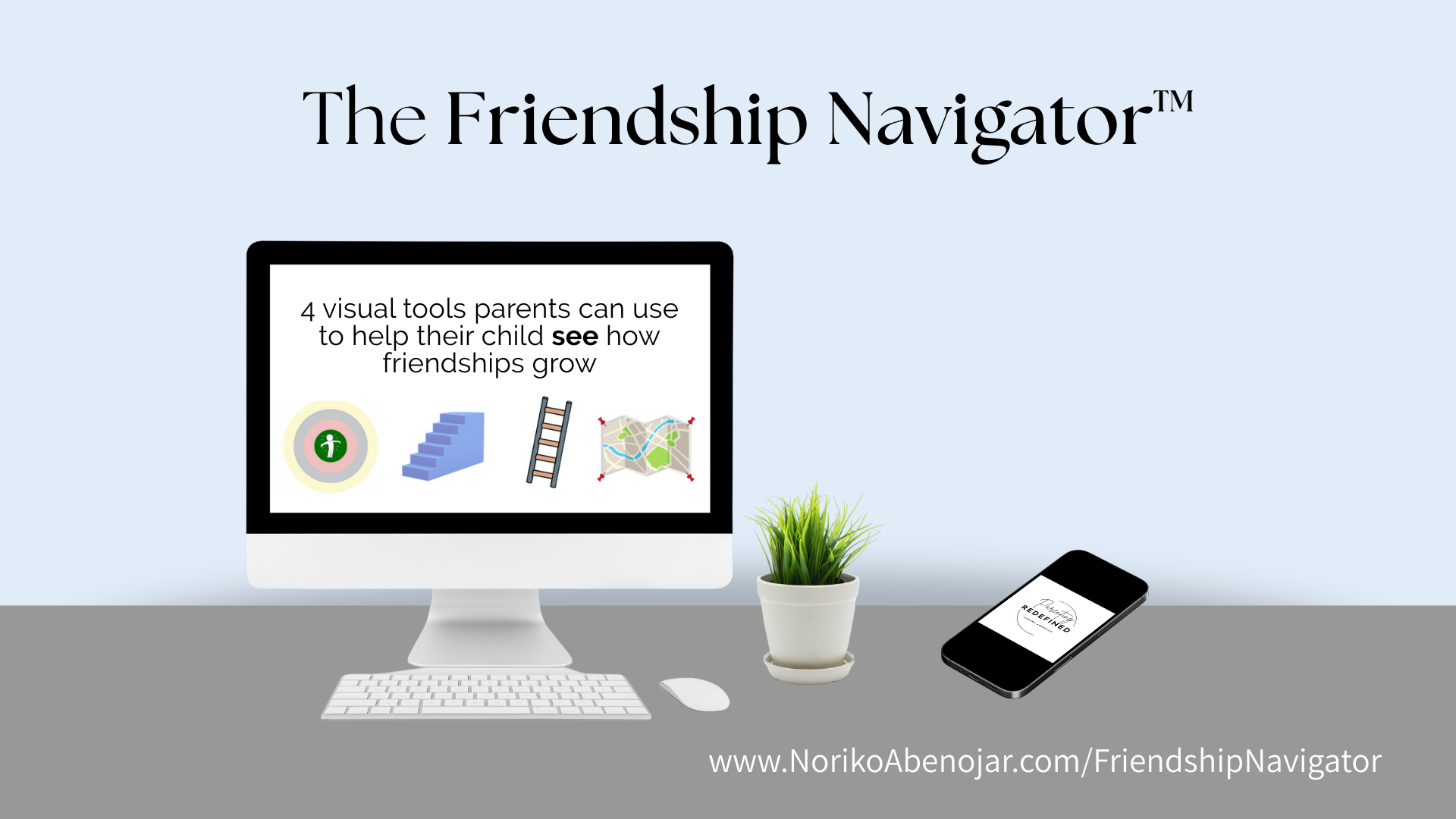
Inside You'll Get:
Helps your child see that all relationships are not the same — who's close, who's an acquaintance, and what's appropriate in each circle.
Breaks big social moments into small, doable steps — instead of "go make friends," your child sees one manageable mini-step at a time.
Shows how friendships develop gradually — perfect for kids who want connection to happen right away but need to see the in-between steps.
Helps your child sort out tricky social situations and figure out where they want to go next.
60+ minutes of video showing you exactly how to use each tool — with examples you can use right away, and language your child can actually hear.
Picture This…
A real moment — made possible by these tools.
Your child comes home frustrated after recess. Instead of jumping into advice mode, you pull out the Friendship Circles and say, "Let's figure out where this friend sits."
The conversation has a starting point — one that isn't about what they did wrong.
Or maybe your child is discouraged because a friendship isn't moving as fast as they want. You show them the Friendship Staircase. "You're here — close friends. That's real progress from where you started. Here's what usually comes next."
These tools give you something to point to, together.
The Friendship Navigator™ Is Perfect For:
Not just be told about them
These tools make friendship concrete and speakable
Something to point to in real moments, not just advice
Bring the concepts to life with your child

MSW PPS · Friendship Coach
Hi, I'm Noriko
With over 30 years of experience, I've helped neurodivergent children and their families build better social understanding.
I created these visual tools because I kept seeing the same thing over and over: kids who wanted to make friends but couldn't see how it actually works.
The Friendship Navigator is what I wish every family had — concrete tools that make the invisible visible. Something you can use together.
Common Questions
7-Day Money Back Guarantee
If the Friendship Navigator doesn't help you have better conversations with your child about friendships, just email within 7 days for a full refund. No questions asked.
Give Your Child the Tools to See Friendship Clearly
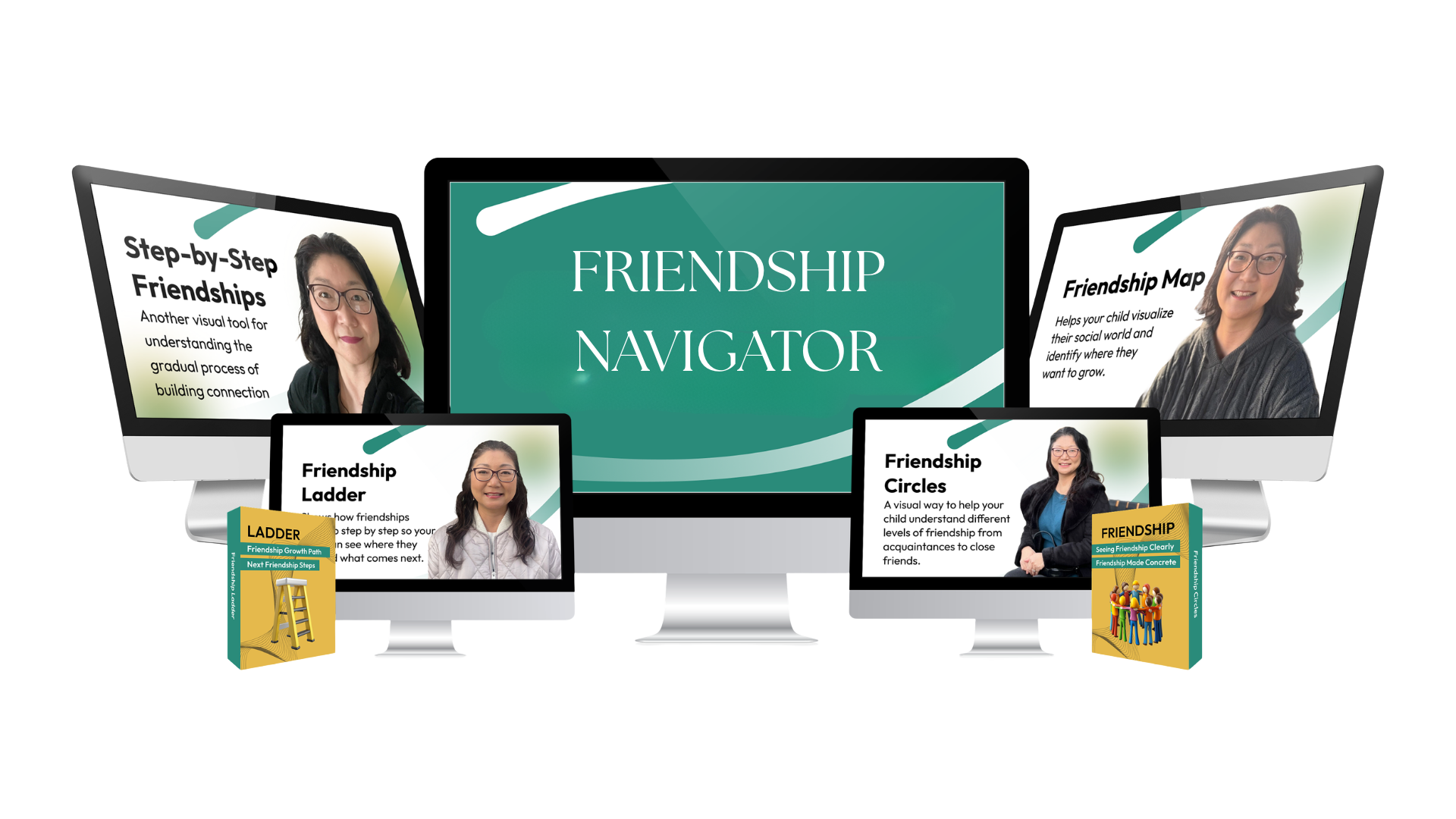
4 visual tools. 60+ minutes of video. Something you can use this week.
One-time payment · Instant access
- Friendship Circles — understanding levels of closeness
- Friendship Ladder — breaking big moments into small steps
- Friendship Staircase — seeing how friendships grow over time
- Friendship Map — navigating tricky social situations
- 60+ minutes of video instruction
- Lifetime access
7-day money back guarantee · No questions asked

Give Your Child the Gift of Understanding
These visual tools will help them see what's been invisible and give you a shared language to support their friendship journey.
Get The Friendship Navigator™ — $47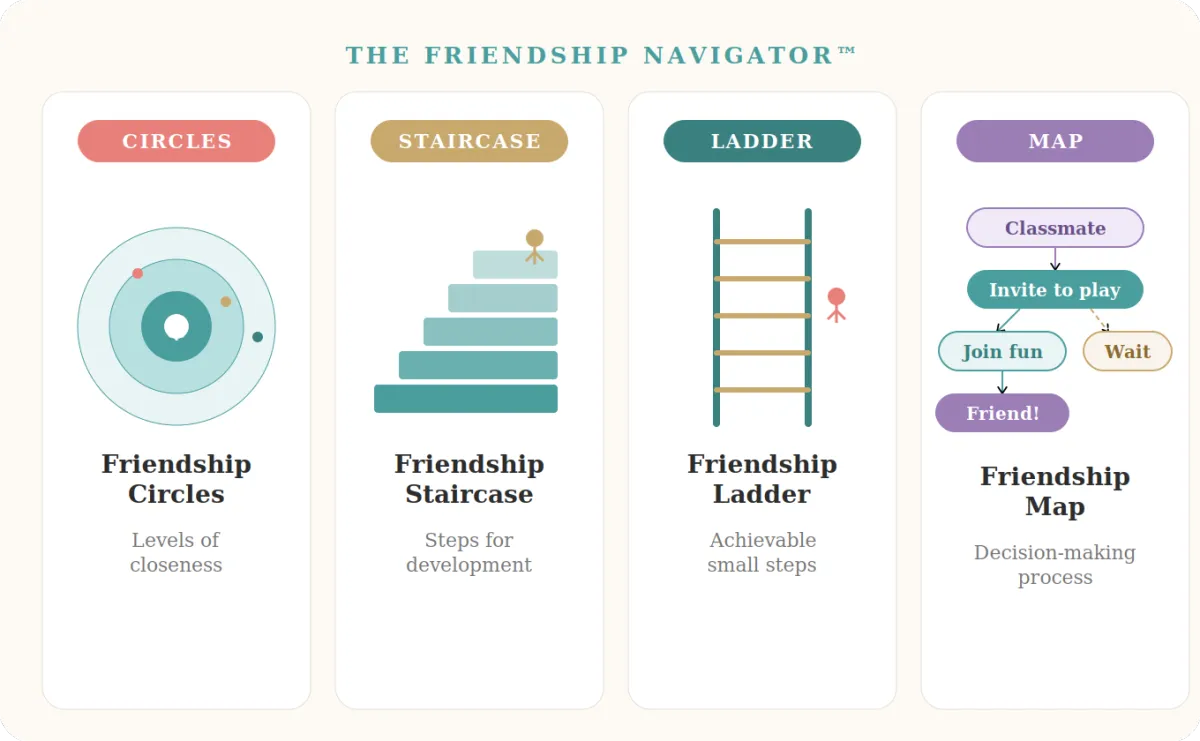
🎯 Friendship Circles
Help your child see that not all relationships are the same — and that's okay. Map out who's close, who's an acquaintance, and what's appropriate to share with each person.
🪜 Friendship Ladder
Breaks down big social moments into small, doable steps. Instead of "go make friends," your child practices one mini-skill at a time — notice, move closer, ask to join.
📈 Friendship Staircase
Shows how closeness grows — from strangers to schoolmates to class friends to best friends. Helps your child see where they are in a relationship and that both people need to climb together.
🗺️ Friendship Map
A problem-solving tool for tricky social moments. Draw out what happened, explore different choices, and help your child see how decisions shape what comes next.